The Automation Economy: Will Robots Create More Wealth or Widen Global Inequality?
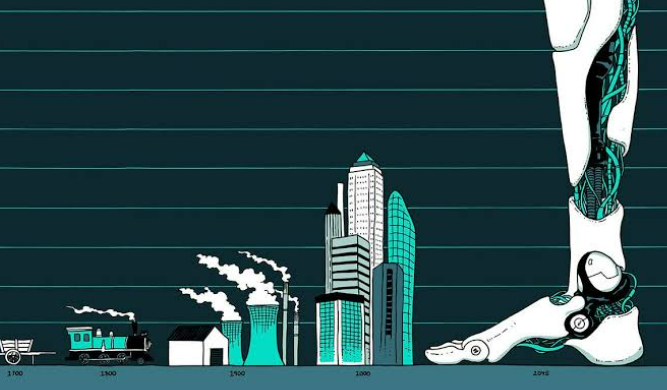
Robots are no longer a distant symbol of the future economy. They are already reshaping factories, warehouses, logistics networks and service industries. As machines become more capable and less expensive to deploy, businesses are using automation to increase output, improve consistency and respond to labor shortages. The economic promise is substantial: higher productivity can support stronger growth, lower production costs and new industries. Yet the benefits are not guaranteed to reach workers and countries equally.
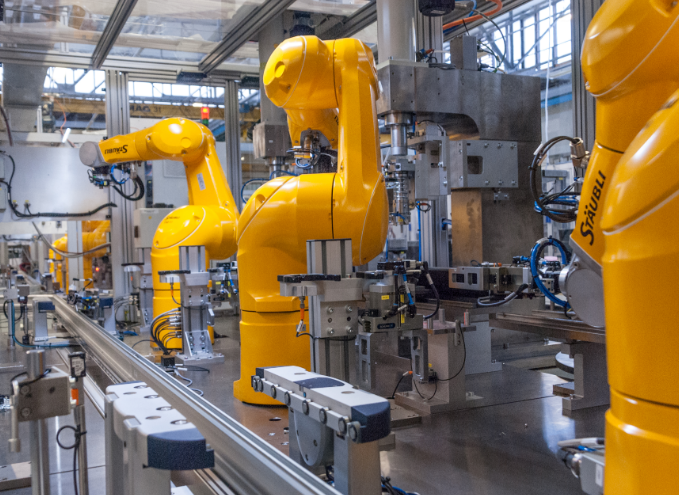
The scale of adoption is accelerating. The International Federation of Robotics (IFR) reported in September 2026 that factories installed 603,307 industrial robots in 2025, an 11 percent increase from the previous year. The global operational stock reached 5.08 million units. The IFR expects annual installations to rise to 655,000 in 2026. These figures capture industrial robots rather than every form of software automation or artificial intelligence, but they show how quickly physical automation is expanding.
The central economic question is therefore not simply whether robots will replace jobs. It is who owns the technology, who gains the productivity dividend, which workers can move into new roles and whether governments can help distribute the gains. The automation economy could create more wealth overall while widening inequality if its rewards flow mainly to capital owners, highly skilled workers and countries with the infrastructure to adopt it.

smokeshopmag.com
Why Businesses Are Investing in Automation
Automation is attractive because it can allow a company to produce more with the same or fewer labor hours. Robots can perform repetitive, physically demanding or highly precise tasks for long periods, while software can coordinate inventory, scheduling, quality control and customer operations. In industries facing labor shortages, rising wages or intense international competition, these capabilities can be decisive.
Productivity and lower operating costs
When automation works well, firms can reduce errors, limit downtime and improve the consistency of products. The gains are especially visible in automotive manufacturing, electronics, metal processing and logistics. The IFR’s 2026 figures show that electronics and automotive each recorded 10 percent growth in robot installations in 2025, while metal and machinery rose by 22 percent.
Robotics is spreading beyond large factories
Will Robots Take Jobs or Change Them?
The effect of automation on employment is more complicated than a simple count of jobs lost. A robot can replace particular tasks without eliminating an entire occupation. Workers may shift toward supervision, maintenance, programming, quality assurance, customer interaction and problem-solving. At the same time, some roles can shrink or disappear, especially when their tasks are repetitive and easy to standardise.
The International Labour Organization’s 2025 update on generative AI and jobs estimated that one in four workers worldwide are in occupations with some degree of exposure to generative AI. Its main conclusion was that job transformation is more likely than wholesale redundancy for most occupations, because human input remains necessary. That research concerns generative AI rather than industrial robots alone, but it reinforces an important point: exposure to technology is not the same as automatic job loss.
Who Captures the Productivity Dividend?
One of the biggest risks is that productivity gains do not translate into broadly shared wage growth. Firms that own robots, software, data and intellectual property can capture a larger share of the value created. Highly skilled workers who design, integrate or manage automation may see stronger wages, while workers whose tasks are easily automated face weaker bargaining power.
Research published by the Bank of Canada in September 2026 illustrates why the distributional effects need careful measurement. Its study of Canadian private firms found robot adoption was associated with higher revenue, value added, non-owner employment and payroll. It found little evidence that adopters’ conventionally measured labor share fell; in the sample, the non-owner labor share increased slightly. The paper cautions that owners can benefit through employment income as well as dividends and retained earnings. The result is a useful reminder that automation’s effects are not identical across firms, countries or measures of income.
At the same time, broader AI-related gains appear unevenly distributed. An IMF working paper published in July 2026 estimated the value of time saved through observed AI use at an indicative $2.7 trillion annually, equivalent to 3.4 percent of GDP. It also found that usage-based gains were concentrated among higher-paid occupations in nearly every country studied, with especially high concentration in some developing economies. These estimates measure the value of time saved, not a direct forecast of additional GDP or cash income, but they highlight the importance of access and diffusion.

The Global Inequality Divide
Countries are not entering the automation era with equal resources. Advanced economies generally have better access to capital, reliable electricity, high-speed connectivity, technical education and firms able to invest in complex systems. They are therefore better positioned to develop and deploy robotics at scale. Countries with weaker infrastructure may find it harder to capture productivity gains, even if they have large workforces that could benefit from better technology.
The IFR’s 2026 data show the geographic concentration of industrial robot adoption. Asia accounted for 76 percent of new installations in 2025, with China alone representing 59 percent of global deployments. China installed 354,226 industrial robots that year, up 20 percent. The United States became the second-largest national market, while Europe experienced a contraction in installations. Robot density also varies sharply: the IFR reported 1,066 industrial robots per 10,000 manufacturing employees in South Korea, compared with a global average of 152.
Developing economies face a two-sided challenge. They can use automation to improve agricultural productivity, logistics, healthcare and public services. But if adoption is concentrated in a small number of large firms or skilled urban workers, the gains may bypass much of the labor force. The ILO and World Bank’s 2026 research on generative AI across 135 countries warns that developing economies may experience disruption before they realise productivity benefits when digital infrastructure and task composition limit adoption.

What Governments and Businesses Should Do
The answer is not to stop automation. Restricting productivity-enhancing technology can leave firms less competitive and slow improvements in safety, quality and living standards. The challenge is to shape the transition so that workers can participate in the new economy and the benefits do not accumulate only among a narrow group.
Invest in skills before workers are displaced
Education and training systems need to adapt to demand for technical literacy, robotics maintenance, data analysis, cybersecurity and advanced manufacturing. Short, modular programmes and employer-led apprenticeships can help workers upgrade skills while remaining employed. Training should also support people in occupations that will be changed rather than eliminated by automation.
Make productivity gains more inclusive
Companies can share gains through higher wages, profit-sharing, career progression and safer working conditions. Governments can strengthen wage-setting institutions, portable benefits and income support for workers moving between jobs. Competition policy also matters: if a small number of firms control essential automation platforms, data and infrastructure, they may capture outsized returns and limit opportunities for smaller businesses.
Help smaller firms and developing countries adopt technology
Conclusion: The Automation Economy Is a Policy Choice as Well as a Technology Shift
Robots are likely to create substantial new wealth by improving productivity, expanding industrial capacity and enabling new services. But higher output does not automatically produce shared prosperity. The distribution of ownership, skills, bargaining power and access to technology will determine whether automation raises living standards broadly or widens the gap between capital owners and workers, and between technology leaders and lagging economies.
The most important question is not whether the world can afford to automate. It is whether societies can build the institutions that allow more people to benefit from it. If investment in skills, competition, infrastructure and worker protections keeps pace with technological change, robots can become tools for more inclusive growth. If those investments fall behind, the automation economy may generate more wealth while leaving too many people with a smaller share of it
Next Article
–Central Banks Face a Difficult Balancing Act Between Inflation and Economic Growth
–Rising Government Debt Raises Questions About the Future of the Global Economy
–The AI Boom Is Reshaping the Global Economy, but Who Will Benefit Most?
.