Is the Global Economy Heading Toward a New Financial Crisis in 2026?
Is the global economy heading toward a new financial crisis in 2026? The question is back in focus as governments, businesses and households navigate high debt burdens, changing interest-rate conditions, geopolitical tensions and uneven growth. These pressures deserve attention, but they do not automatically mean that a crisis is imminent.

smokeshopmag.com
Financial crises rarely begin with one warning signal. They usually emerge when several vulnerabilities reinforce one another: borrowers struggle to repay debt, lenders become more cautious, asset prices fall, and confidence weakens. The central question for 2026 is whether financial stress could spread through banks, funds, companies and sovereign borrowers.
Why financial stability remains under pressure
The world economy is interconnected. A shock in one major market can affect currencies, borrowing costs, commodity prices and trade finance elsewhere. Several structural risks deserve close monitoring.
1. High public and private debt
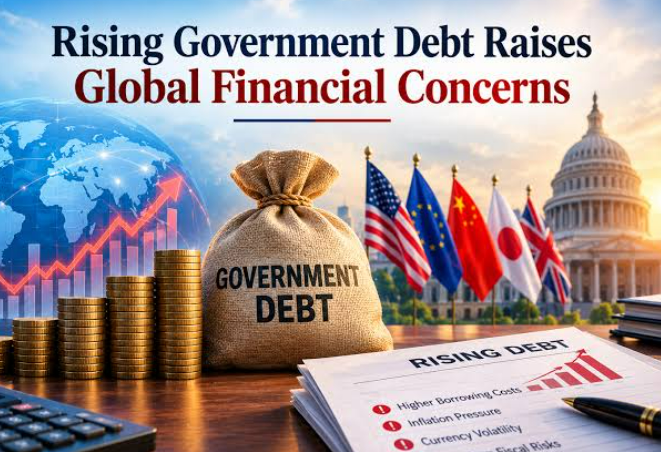
Debt can support investment and help governments respond to emergencies. The risk rises when interest payments absorb a growing share of income or public revenue. Governments refinancing large amounts of debt may face higher costs if investors demand greater returns. Highly leveraged companies and households can also become vulnerable when loans reset at higher rates or revenues weaken.
Debt levels alone do not predict a crisis. The maturity of the debt, the currency in which it is issued, the borrower’s income and the strength of institutions all matter.
2. Interest rates and refinancing pressure
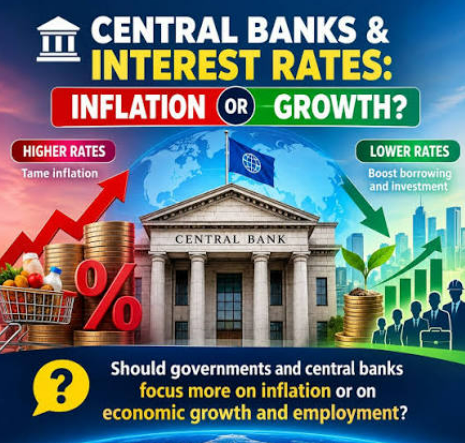
Central banks must balance inflation control with economic activity and financial stability. Even when policy rates begin to fall, households and companies may continue to face expensive credit because market yields, bank lending standards and risk premiums do not move in lockstep.
Borrowers that took on debt when money was cheap may discover that refinancing is more difficult. This can expose weak business models, pressure commercial property markets and increase loan losses for lenders.
3. Banking and non-bank financial risks
Banks are not the only institutions that provide credit. Investment funds, insurers, private-credit providers and other non-bank financial intermediaries are important parts of the modern financial system. Their activities can improve access to finance, but leverage, liquidity mismatches and opaque exposures can amplify stress during a sudden sell-off.

How trade tensions and geopolitical shocks can spread
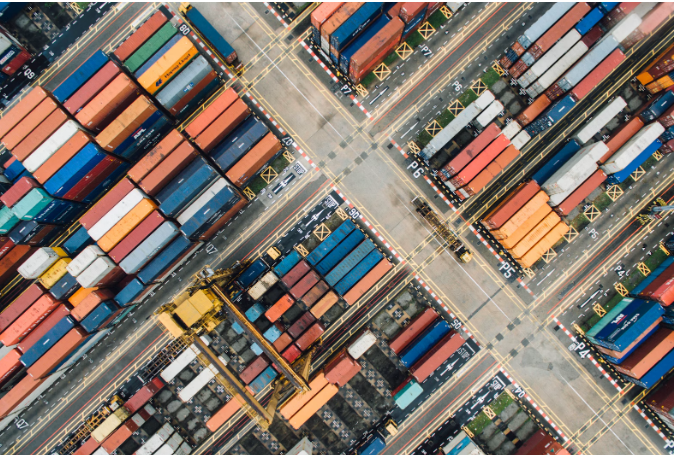
Trade restrictions, sanctions, regional conflicts and shipping disruptions can raise costs for businesses and delay deliveries. If energy, food or key industrial inputs become more expensive, inflation may prove harder to control. Companies facing higher costs may cut investment or hiring, while countries that depend on imported essentials can experience pressure on their currencies and budgets.
Global supply chains have adapted since the pandemic, but diversification takes time and can be expensive. A disruption does not automatically create a financial crisis; the danger is greater when it hits already indebted businesses or countries with limited policy room.
Warning signs analysts are watching in 2026
- Credit spreads: a rapid increase can signal that investors are demanding more compensation for taking risk.
- Bank funding conditions: difficulty obtaining stable funding or a sudden tightening of lending standards can indicate stress.
- Defaults and arrears: rising missed payments among households and businesses may reveal pressure that was previously hidden.
- Currency volatility: sharp moves can make foreign-currency debt more expensive for governments and companies.
- Market liquidity: assets can become difficult to sell at reasonable prices when many investors seek cash at once.
- Employment and business investment: weakening hiring and cancelled projects can turn financial pressure into a broader downturn.
No single indicator is enough. Analysts look for several measures deteriorating together and for evidence that problems are spreading beyond a narrow sector.
Could the world avoid another major crisis?
Yes. A crisis is not inevitable. Strong bank capital and liquidity, credible central-bank policies, transparent supervision, well-designed deposit protection and timely restructuring of unsustainable debt can reduce the likelihood that financial stress becomes systemic.
Governments also face a difficult task: supporting vulnerable households and productive investment without allowing public finances to become less sustainable. International cooperation matters because capital flows, banks and supply chains cross national borders.
What this could mean for households and businesses
For households, a period of uncertainty can affect mortgage costs, job prospects, savings and the prices of imported goods. Businesses may need to review cash flow, debt maturities, currency exposure and supplier concentration. These are prudent preparations, not proof that a crisis is about to happen.
Investors should be wary of dramatic predictions and consider their own time horizon, diversification and ability to withstand losses. This article is for general information and is not personal financial advice.
Conclusion: a serious risk, not a foregone conclusion
The global economy in 2026 faces meaningful financial vulnerabilities, particularly where high debt, refinancing needs, market leverage and geopolitical shocks overlap. But predicting a crisis with certainty would be misleading. The more useful approach is to track whether warning indicators are worsening together, whether policymakers are responding effectively and whether stress is spreading across institutions and countries.
The next global financial crisis, if one occurs, may not look exactly like the last. Understanding the channels through which risk travels is essential for governments, businesses and households seeking to prepare without overreacting.
Next Article
–Central Banks Face a Difficult Balancing Act Between Inflation and Economic Growth
–Rising Government Debt Raises Questions About the Future of the Global Economy
–The AI Boom Is Reshaping the Global Economy, but Who Will Benefit Most?